Drain Cleaning and Clog Removal in Erie
Slow, smelly and blocked drains traced to the clog and cleared, from the kitchen sink to the basement floor drain.
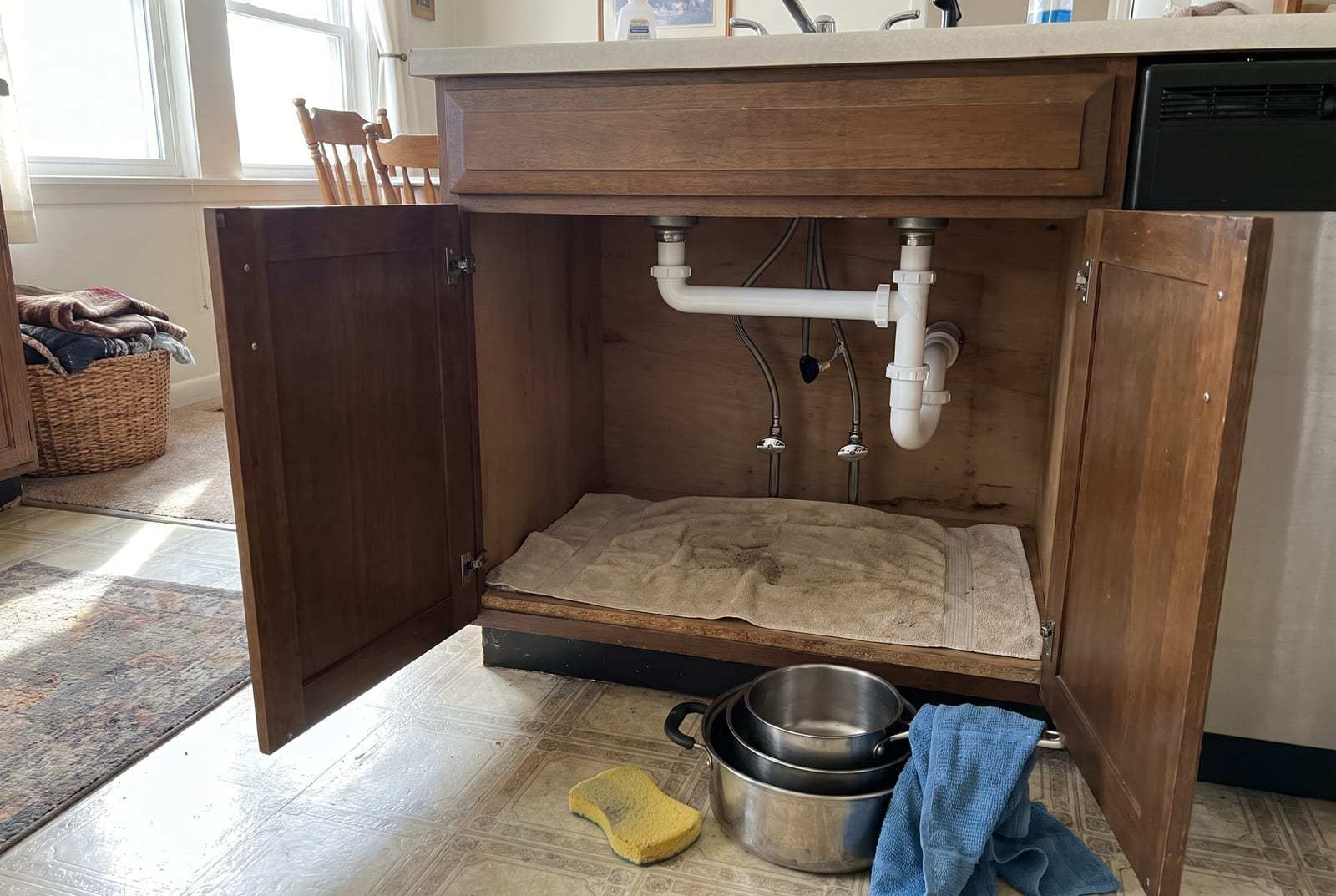
Every drain collects something. Kitchen sinks take grease and food scraps, bathroom sinks and tubs take hair and soap, laundry lines take lint, and basement floor drains take silt, plus whatever a blocked main pushes back up.
Clearing starts with finding where the clog sits. One slow fixture points to its own trap or branch line. Several at once, or water rising at the floor drain while the washer empties, point further down, to the main line.
The usual approach is the least aggressive method that opens the line fully. Before we call a drain job done, we run water at every fixture we worked on and watch for slow drains.
Kitchen, Bath, Laundry and Floor Drains
Where the water backs up says a lot about where the clog is and what it is made of.
Drain symptoms
-
Kitchen sink
- Likely cause
- Grease, food scraps and coffee grounds
- How it is cleared
- Trap cleaned; hand auger or drum machine through the trap arm
-
Bathroom sink
- Likely cause
- Hair and soap on the pop-up stopper or in the P-trap
- How it is cleared
- Stopper and trap cleaned; small hand auger
-
Tub or shower
- Likely cause
- Hair and soap scum at the strainer or trap
- How it is cleared
- Stopper removed; hand auger through the drain or overflow
-
Toilet
- Likely cause
- Too much paper, wipes or a lodged object
- How it is cleared
- Closet auger; toilet lifted and reset on a new wax ring if needed
-
Laundry standpipe
- Likely cause
- Lint, or a line too small for the washer’s pump-out
- How it is cleared
- Auger through the standpipe; a lint trap on the hose
-
Basement floor drain
- Likely cause
- Silt, debris, or a dry trap letting sewer gas in
- How it is cleared
- Drum machine; trap refilled with water
-
Any drain that smells
- Likely cause
- Buildup in the trap, a dry trap or a blocked vent
- How it is cleared
- Drain cleaned; vent checked if traps gurgle
-
Every drain in the house
- Likely cause
- A clog in the main line or the sewer line
- How it is cleared
- Drum machine from the main cleanout; a broken line may need replacing
When every drain is slow, or water comes up through the floor drain as other fixtures run, the clog is in the main line. The first steps are then those for a sewer backup: stop running water and keep chemical cleaners out.
Augers, Drum Machines and Water Jetting
A cable cuts a path through a clog; a water jet scours the whole pipe wall, so a grease-coated line stays open longer. The choice depends on the clog, the pipe’s age and how far down the trouble sits.
| Method | Best for | Not suited to |
|---|---|---|
| Plunger | Fresh clogs close to a toilet or sink | Grease buildup, main lines, drains holding chemicals |
| Hand auger | Hair and soft clogs near the drain | Deep clogs, hard scale or roots |
| Drum machine | Packed buildup and roots in branch lines and the main | Broken or collapsed pipe, which needs repair |
| Hydro-jetting | Grease-coated kitchen lines | Cracked clay or thin, badly rusted cast iron |
| Pulling the trap | Rings, caps and objects dropped down a sink | Clogs past the trap |
Cast Iron Scale and Basement Floor Drains
Many of Erie’s older houses still drain through their original cast iron indoors and clay pipe out to the street. Cast iron rusts from the inside: scale narrows the pipe and snags grease and paper, so a cleared line can close up again. Clay pipe was laid in short sections, and every joint is a way in for roots from the mature trees along older streets. Cut roots grow back.
The basement floor drain in these houses usually ties into the same main as the toilets and sinks. As the lowest opening, it is where a main-line clog shows first, so water there deserves attention even while the upstairs drains seem fine.
Repeat Clogs: Grease, Roots and Chemical Cleaners
Why did my drain clog again a few weeks after it was cleared?
A small cable can punch a hole through a clog without scraping the pipe walls, and the grease left around that hole catches the next load. The cause may also still be there: grease down the sink, wipes in the toilet or roots in a joint.
A drain that keeps closing in the same spot often has a fault in the pipe, such as a sag where water stands. Cleaning restores the flow; repairing that section ends the cycle.
Do tree roots grow back after a sewer line is cleared?
Yes. Cutting removes the roots inside the pipe, but the joint they came through stays open, and regrowth often starts within a year or two.
Regular cleaning keeps a root-prone line flowing. A lasting fix means replacing the damaged section, which on an old clay line can mean new pipe under the front yard.
Do chemical drain cleaners make clogs come back?
They often open a narrow channel and leave the rest of the clog in place. Their heat and caustic chemicals can also harm old metal pipe, rubber couplings and garbage disposals.
Whatever stays in the trap is a hazard for whoever opens the line next.
Does running hot water keep grease from clogging the kitchen drain?
Only for the first few feet. Grease cools and hardens further down the line, often where the pipe runs through a cold basement, and coats it a little more each time.
Wipe pans and put cooled grease in the trash. A garbage disposal grinds food, but it does not make grease, rice or stringy scraps safe for the drain.
Before the Drain Line Is Opened
Worth doing ahead of the visit:
- Stop pouring chemical cleaners; they sit in the trap and can splash whoever opens the line.
- Clear out the cabinet under the sink so the trap is easy to reach.
- Note which drains are slow or blocked, and which one went first.
- Keep a bucket and old towels handy for the water standing in the line.

A Drain That Keeps Slowing Down
Call or send a request naming the slow drains and when they started, and say whether the floor drain is involved.