Drain Cleaning
Kitchen, bathroom, laundry and basement floor drains cleared, and clogged sewer lines opened.
Learn More about Drain CleaningSump pumps checked before the spring melt Basement drains cleared after summer storms Outdoor lines drained before the first freeze Frozen and burst pipes repaired
contact@harborcreekplumbing.comDrain, water heater, pipe and fixture work for houses, rentals and small shops in and around Erie.
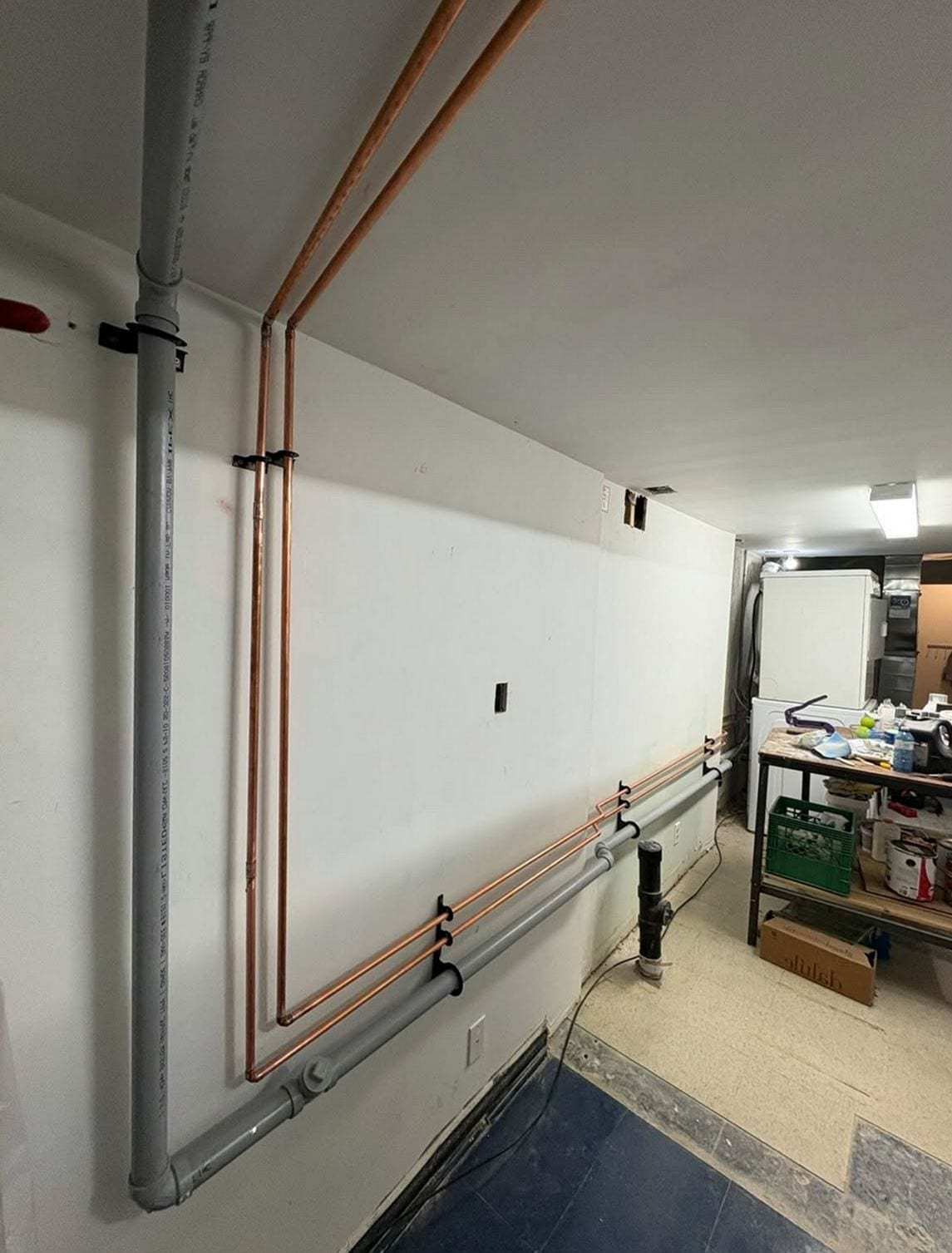
Harborcreek Plumbing works on the systems a building depends on every day: the drains and sewer line that carry water out, the supply pipes that bring it in, the water heater, and the toilets, faucets and fixtures at the end of each line. Sump pump installation is part of the work too, for basements that take on water.
Most jobs are in homes, and the same services reach rental properties, small shops and older multi-unit buildings. In older buildings the pipes, drains and fixtures have usually aged together, so finding the cause matters more than treating the symptom.
A slow drain, a cold shower, a stained ceiling and a toilet that will not stop running each point to a different kind of work, so the problem you can see is the right place to start.
Kitchen, bathroom, laundry and basement floor drains cleared, and clogged sewer lines opened.
Learn More about Drain CleaningTank and tankless heaters, gas or electric: no hot water, leaks, rumbling and rusty water, repaired or replaced.
Learn More about Water HeatersLeaking pipes fixed and worn galvanized or copper lines replaced, from one section to a whole-house repipe.
Learn More about Pipe RepairRunning toilets, dripping faucets, sinks, showers and garbage disposals repaired, replaced or installed.
Learn More about Toilets & FixturesThese are worth finding while nothing is wrong, so none of them is a search when something is:
The main shutoff matters most in a cold snap, when a frozen pipe can split and leak as soon as it thaws.
Start from what you notice rather than a guess at the cause. Several slow drains at once, or water rising at the basement floor drain, point past the fixtures to a backup in the main line.
Service finder
A sink, tub or shower drains slowly
Several drains slow at once, or water at the floor drain
A wet basement after heavy rain or snowmelt
No hot water, or it runs out fast
Water around the base of the heater
A damp ceiling, wet wall or dripping pipe
Low pressure or rusty water at every tap
A running toilet or a dripping faucet
A jammed disposal or a worn-out shower valve
No water at one tap in freezing weather
Choose your answers, then press Show the Service.
Most plumbing problems can go either way, and the symptom alone rarely decides it.
Start with where the failure is. A worn part, such as a faucet cartridge, a toilet flapper, a heating element or a valve, is a repair. A failed body, such as a cracked toilet tank, a water heater leaking from its shell or a pipe rusted thin along its length, is a replacement.
Age, how often it has failed and whether parts are still made settle the cases in between. Either way, the choice comes after the cause is found, not before.
Often, when the repair is small and the rest is sound. A new fill valve in an older toilet or a new cartridge in a solid faucet can keep it working for years.
A large repair on something near the end of its life is different. That cost usually goes further toward a replacement chosen ahead of time, rather than one picked in a hurry after a failure.
Mostly the parts around the old fixture: stop valves that no longer close, corroded supply lines, a soft floor under a toilet flange, a drain at the wrong height for a new vanity, or venting that does not suit a new water heater.
These are worth knowing about before the work starts, so they are part of the plan rather than a surprise halfway through.
What to ExpectNote these before you call. Together they usually separate a fixture problem from a line problem before anyone arrives.

Call or send a request with what you have noticed and where, and the right kind of work follows from there.