
Water Heater Repair and Replacement in Erie
Tank and tankless water heaters, gas and electric, diagnosed and then repaired or replaced.
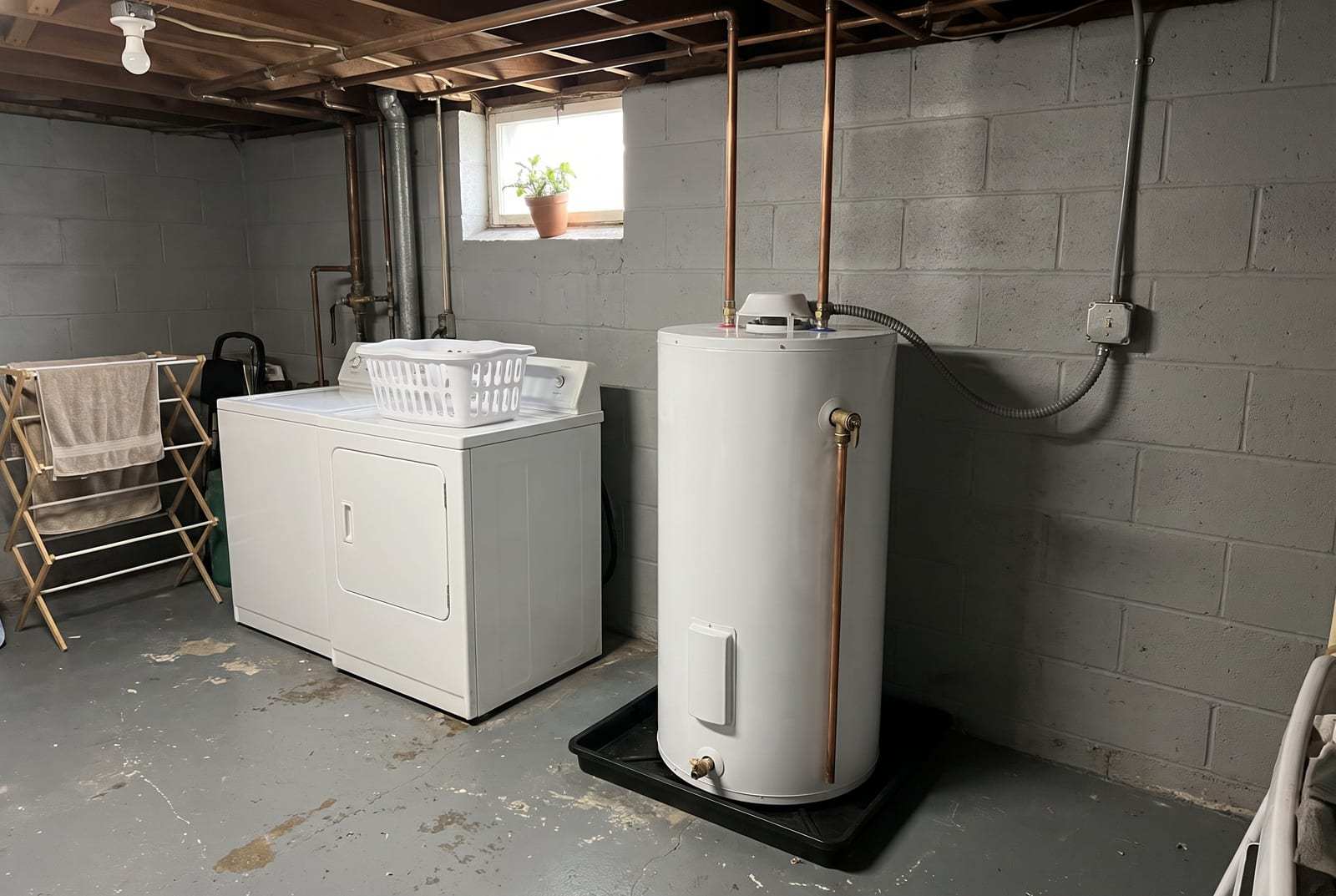
Gas and electric heaters fail in different ways. A gas tank depends on its pilot or igniter, the thermocouple, the gas valve and a clear vent. An electric tank usually has two heating elements, each with its own thermostat. A tankless unit heats water only while a tap runs, and scale is its usual trouble.
Parts outside the tank can be replaced on their own; a tank that leaks from its body cannot, so the heater is replaced. After any heater job, we confirm the temperature at the tap and check the venting and the relief valve discharge.
No Hot Water?
If you smell gas, skip this: leave the house and call the gas utility from outside.
Choose your answers, then press Show What to Do.
Water Heater: No Hot Water, Noise and Leaks
The same symptom can mean a small part on a young heater and the end of an old one, so age matters as much as the symptom.
Symptoms
-
No hot water, gas
- Likely cause
- Pilot out, a worn thermocouple or a failed gas valve
- Fix
- Relight by the label if there is no gas smell; replace the part
-
No hot water, electric
- Likely cause
- A tripped breaker, a failed element or thermostat
- Fix
- Find why it tripped; replace the part
-
Hot water runs out fast
- Likely cause
- A failed lower element, a broken dip tube or sediment
- Fix
- Replace the part; flush the tank
-
Rumbling or popping
- Likely cause
- Sediment on the tank bottom
- Fix
- Flush the tank; on an old tank, plan the replacement
-
Rusty hot water
- Likely cause
- A used-up anode rod, the tank rusting inside
- Fix
- A new anode rod if caught early, else a new tank
-
Rotten-egg smell in the hot water only
- Likely cause
- Bacteria reacting with the anode rod
- Fix
- A different anode rod and a flush
-
Water around the base
- Likely cause
- A valve, a fitting or the tank itself
- Fix
- Valves and fittings repaired; a leaking tank replaced
-
T&P relief valve dripping
- Likely cause
- Thermal expansion, overheating or a worn valve
- Fix
- Find the cause; an expansion tank or a new valve
Keeping an Older Heater or Replacing It
How long does a tank water heater usually last?
Typically about 8 to 12 years, though it varies. Sediment and high water pressure shorten that; regular flushing and a new anode rod in time can stretch it. The age is on the label, as a date or coded into the serial number.
Can a leaking water heater be repaired?
It depends on where the water comes from. A leak at the drain valve, a pipe connection or the relief valve can usually be fixed. Water seeping from the tank itself means the steel has rusted through, and the heater has to be replaced.
Which water heater repairs are usually worth making?
Parts outside the tank: elements and thermostats on an electric heater, the thermocouple or gas valve on a gas one, and the anode rod, dip tube and relief valve on either. On a tankless unit, descaling the heat exchanger often brings it back.
Is it worth replacing a water heater before it fails?
Often, when the tank is past its expected life, rumbles from heavy sediment, shows rust at the base or sits where a leak would ruin a finished room. A planned swap lets you choose the replacement instead of taking whatever is available that day.
Replacing a Heater: Tank or Tankless
When a heater has to go, the choice is mostly another tank or a tankless unit. It turns on how much hot water runs at once and what venting and gas or electrical supply is already there.
| Factor | Tank | Tankless |
|---|---|---|
| Hot water supply | Runs short when the tank empties, then recovers | Continuous, up to the unit’s flow rate |
| Gas venting and supply | Usually reuses the existing vent and gas line | Usually new venting, often a larger gas line |
| Electric supply | One 240-volt circuit | Whole-house models can need a larger service |
| Upkeep | Flushing sediment; checking the anode rod | Descaling; cleaning the inlet screen |
| Typical life | Typically 8–12 years | Often longer, with regular descaling |
| Very cold incoming water | Slower recovery | Less flow at full temperature |
Tank Sediment and Slow Winter Recovery
Water drawn from Lake Erie carries dissolved calcium and magnesium. Heating drives those minerals out, and they settle on the tank bottom as sediment. On a gas heater the layer sits between the burner and the water, causing the rumbling and wasting heat; on an electric heater it can bury the lower element. Flushing the tank about once a year slows the buildup.
An Erie winter adds a second load. The water coming in from the street is far colder, so every gallon needs more heating and a shower takes a larger share of hot water. A tank in a basement corner recovers more slowly, and a heater that kept up in September can run short in February with nothing broken.
Label, Shutoffs and Space Around the Heater
Before the visit, where it is safe:
- Find the label and note the brand, model and serial number; the age is usually coded in the serial.
- Turn the gas control to Off or switch off the breaker, only if you smell no gas and stand on dry floor.
- Clear boxes and storage from around the heater and the path to it.
- If it is leaking, shut the cold supply valve at the top of the heater.

Cold Showers or a Wet Floor by the Heater
Call with the heater’s age and what it is doing; a leaking tank is worth a phone call rather than a form.